Minimalist Calligraphy Line Patterns: Where Simplicity Meets Expressive Craft
Imagine a single brushstroke—deliberate, fluid, and quietly confident—that carries the weight of intention without clutter. That’s the essence of Minimalist Calligraphy Line Patterns. Not ornate flourishes or dense script, but distilled motion: rhythm, balance, and breath made visible. These aren’t just decorative elements—they’re versatile design tools built for creators who value clarity, intentionality, and tactile authenticity—even in digital form.
What Makes These Patterns Distinctly Minimalist—And Why It Matters
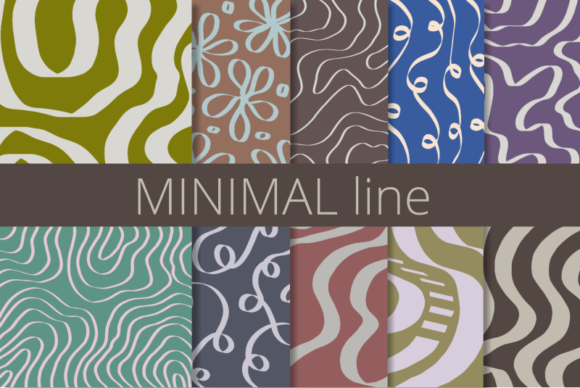
Minimalism in calligraphy isn’t about removing artistry—it’s about refining it. Each pattern in this collection begins with hand-drawn brushwork, then undergoes thoughtful editing to preserve gesture while eliminating visual noise. The result? Lines that feel human—not rigid, not robotic—but purposefully restrained. You’ll notice subtle tapering, natural variation in stroke weight, and gentle curvature that echoes traditional ink flow—even though every line is digitally crafted.
This restraint serves real-world needs. In modern scrapbooking, for example, busy backgrounds compete with photos and journaling. A bold floral motif might overwhelm a quiet family moment; a Minimalist Calligraphy Line Pattern, by contrast, frames content without shouting. It supports storytelling instead of hijacking it.
Digital Papers Designed for Real Creative Workflows
The set delivers 18 unique patterns—each available as a high-resolution JPG (300 dpi, 6944 × 6944 px), SVG, and EPS file. That tri-format approach solves common pain points across disciplines:
- JPG files are ready to drop into Canva, Photoshop, or Procreate for quick mockups, social media templates, or printed layouts—no setup required.
- SVG files scale infinitely without pixelation, making them ideal for Cricut or Silhouette cutting machines. Use them for custom vinyl decals on notebooks, minimalist wall art, or delicate textile stencils.
- EPS files integrate cleanly into Adobe Illustrator and InDesign workflows—perfect for designers building cohesive brand assets, packaging systems, or editorial spreads where precision matters.
This flexibility means one purchase adapts to multiple roles: the hobbyist scrapbooker, the indie fashion label developing fabric prints, the mid-century-inspired stationery brand curating a capsule collection. No need to hunt for compatible formats—or worse, settle for low-res alternatives that blur when enlarged.
Muted Palettes With Maximum Customization Power
The base colors are intentionally soft—think dusty sage, warm oat, charcoal grey, and faded terracotta. These tones reflect current interior, fashion, and textile trends rooted in calm, earthy sophistication. But here’s what truly sets these patterns apart: they’re vector-based. That means you’re not locked into those hues. Open any SVG or EPS file in Illustrator or Affinity Designer, select a stroke or fill, and shift the entire palette in seconds.
Need your textile print to match a specific linen swatch? Adjust saturation and lightness until it harmonizes. Preparing a client presentation in navy and gold? Recolor the pattern to align—without losing stroke integrity. This level of control transforms static assets into living design elements.
Beyond Scrapbooking: Where Minimalist Calligraphy Line Patterns Shine
While scrapbooking is an obvious fit—especially for memory-keeping styles that favor clean typography and uncluttered composition—these patterns thrive far beyond the craft table.
Fashion & Textile Design
Textile designers increasingly lean into “quiet luxury” aesthetics: subtle texture over loud graphics, repetition over randomness. A Minimalist Calligraphy Line Pattern translated onto silk charmeuse or organic cotton becomes a whisper of movement—a scarf border, a lining detail, or a tonal repeat on a blazer pocket. Because the lines are thin and rhythmic—not dense or heavy—they translate beautifully at scale without overwhelming fabric drape or structure.
Mid-Century Modern Interiors & Branding
Mid-century design celebrates clean geometry, organic curves, and functional elegance. These patterns echo that language: think Eames-inspired lounge chair silhouettes drawn with a single expressive line—or a repeating wave motif reminiscent of Alexander Girard’s textile work. When applied to wallpaper samples, business cards, or ceramic decals, they add warmth and craft without veering into nostalgia or kitsch.
Digital Product Creation
Planners, printable calendars, and Notion templates benefit immensely from understated visual hierarchy. A faint calligraphic grid beneath weekly tasks adds grounding without distraction. A border composed of linked minimalist strokes gives PDF downloads a polished, artisanal feel—ideal for coaches, educators, or wellness practitioners building premium digital offerings.
Practical Tips for Getting the Most From Your Collection
Start small. Try layering one pattern at 10–15% opacity behind hand-lettered quotes in Procreate. Notice how it adds depth without competing. Then experiment with clipping masks—drop a pattern inside a circle shape to create custom monogram accents for wedding stationery.
For textile applications, test scale first. Print a 4" × 4" swatch of your chosen pattern at actual size on fabric paper. Hold it against your intended material. Does the line weight hold up? Is spacing comfortable? Vector files let you adjust spacing non-destructively—so tweak before committing to yardage.
If you're using these in branding, consider pairing one pattern with a strong sans-serif typeface (like Poppins or Inter) and generous white space. The contrast between precise geometry and expressive line reinforces modern minimalism—not cold austerity.
Why Quality Format Variety Isn’t Optional—It’s Essential
Many digital paper collections offer only JPGs. That works—for a while. But once you try to resize for a large-format print, cut with a machine, or recolor for a new product line, limitations surface fast. Pixelation, color banding, or missing transparency channels become roadblocks—not creative choices.
Having SVG and EPS included isn’t a bonus feature. It’s infrastructure. It signals that the creator understood how these patterns would actually be used—not just admired. It means you can move seamlessly from screen to stitch, from sketch to shelf, without compromising fidelity or intent.
Final Thought: Less Isn’t Empty—It’s Intentional
A Minimalist Calligraphy Line Pattern doesn’t ask you to do more with less. It invites you to do *exactly* what matters—with confidence, clarity, and quiet strength. Whether you’re hand-stitching a leather journal cover, drafting a mood board for a sustainable apparel launch, or designing a calming meditation app interface, these patterns offer grounded, human-centered texture. They don’t shout for attention—they earn it, softly, through consistency, craft, and care.
That’s the power of minimalism done right: not absence, but presence—refined.